
How Sustainable Tableware Is Manufactured in India
When we pick up a disposable bowl or plate, it is easy to think of it simply as a foodservice product. But sustainable tableware has a very different story behind it.
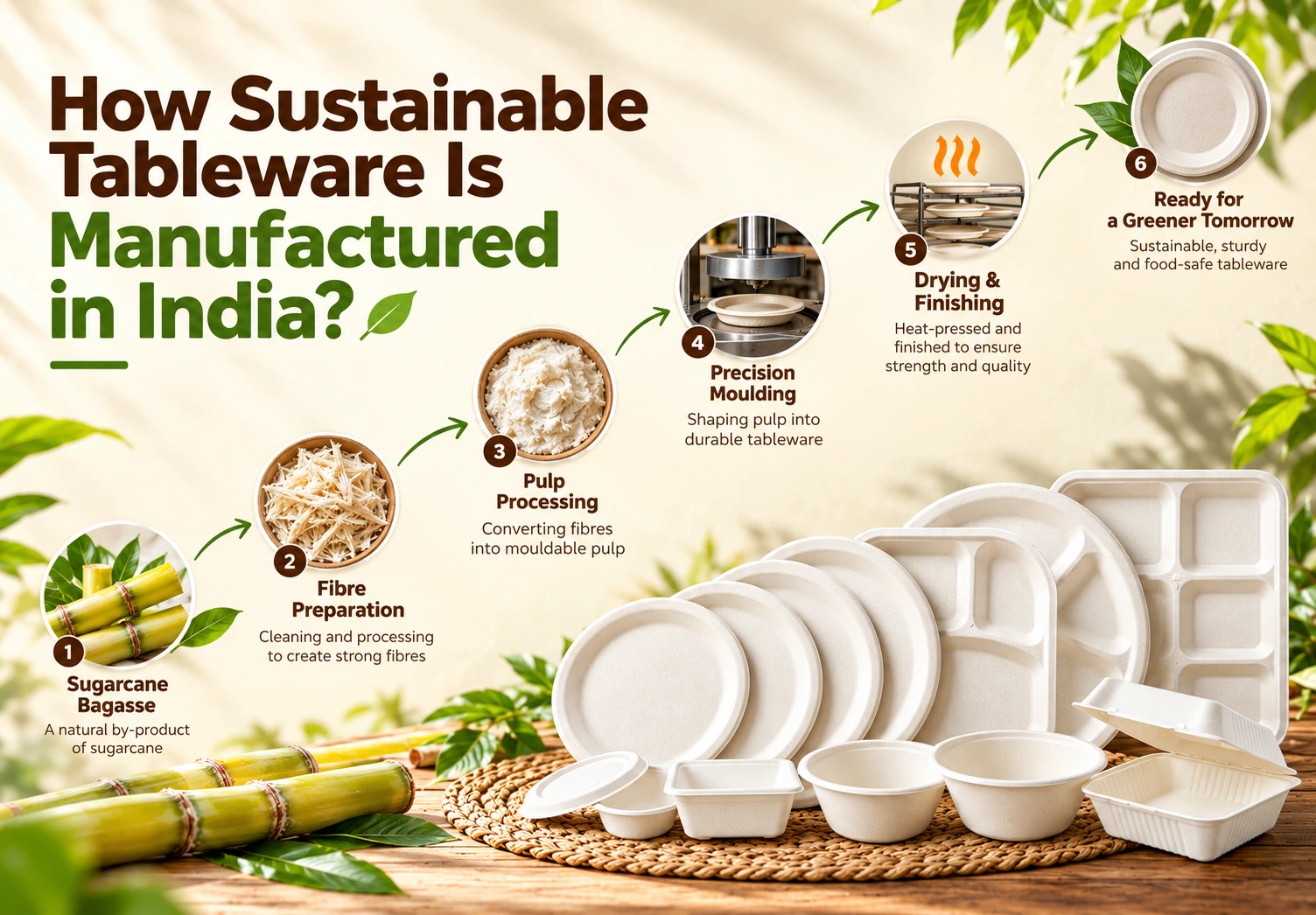
Instead of starting with conventional plastic, many plant-fibre products begin with agricultural material such as sugarcane bagasse. Through a combination of fibre preparation, pulp processing, moulding, drying, finishing and quality control, that material can be converted into plates, bowls, trays and food containers designed for everyday foodservice use.
India has developed a growing manufacturing ecosystem around these materials. For companies such as Dinearth, sustainable tableware is not simply about replacing one disposable product with another. It is about using renewable plant fibre to create practical food packaging while maintaining the performance and quality expected by restaurants, QSRs, caterers, food businesses and other commercial users.
So, how does sustainable tableware actually get manufactured?
Let's look at the journey.
1. It Starts With Sugarcane Bagasse
One of the most widely used plant fibres in sustainable tableware is sugarcane bagasse.
Bagasse is the fibrous material that remains after sugarcane is processed for its juice. Rather than treating this fibre only as a by-product of the sugar industry, manufacturers can process it further and use it as the raw material for moulded-fibre products.
Dinearth describes its tableware as being made from 100% renewable natural plant fibre and explains that the plant fibre remaining after processing can be moulded into strong food packaging products. The company also describes its products as certified compostable and biodegradable.
This is where the sustainability story begins: a renewable plant-based material becomes the starting point for a foodservice product.
2. Preparing the Fibre
Raw plant fibre cannot simply be placed into a mould and turned into a bowl.
The material first needs to be prepared for manufacturing. Depending on the production system, this can involve cleaning, refining and processing the fibre before it is converted into a suitable pulp.
The objective is consistency.
A manufacturer needs the fibre to have the right characteristics so that the finished product can maintain its intended shape, strength and surface quality.
This stage is particularly important because variations in the raw material can eventually affect the finished tableware.
3. Turning Fibre Into Pulp
The prepared fibre is mixed with water and processed into a pulp or slurry.
Think of this as the stage where loose plant fibre becomes a material that can be distributed into a mould.
The consistency of this pulp matters. Different products can require different characteristics depending on their shape, size, thickness and intended application.
Industry manufacturing references describe pulp preparation as one of the key stages before forming, because the quality and consistency of the pulp influence the final product.
This is also one reason why sustainable tableware manufacturing is more technical than it may appear from the finished product.
4. Moulding Gives the Product Its Shape
This is the stage where the pulp starts becoming recognisable as tableware.
The prepared fibre pulp is formed using moulds designed for particular products.
A plate requires one mould design. A bowl requires another. A compartment tray or takeaway container needs a completely different geometry.
During moulding, water is removed from the fibre and the material takes the shape of the mould. Heat and pressure can then be used to consolidate the fibre and create the required structure.
Modern moulded-fibre manufacturing therefore combines material science, mould design and controlled production processes.
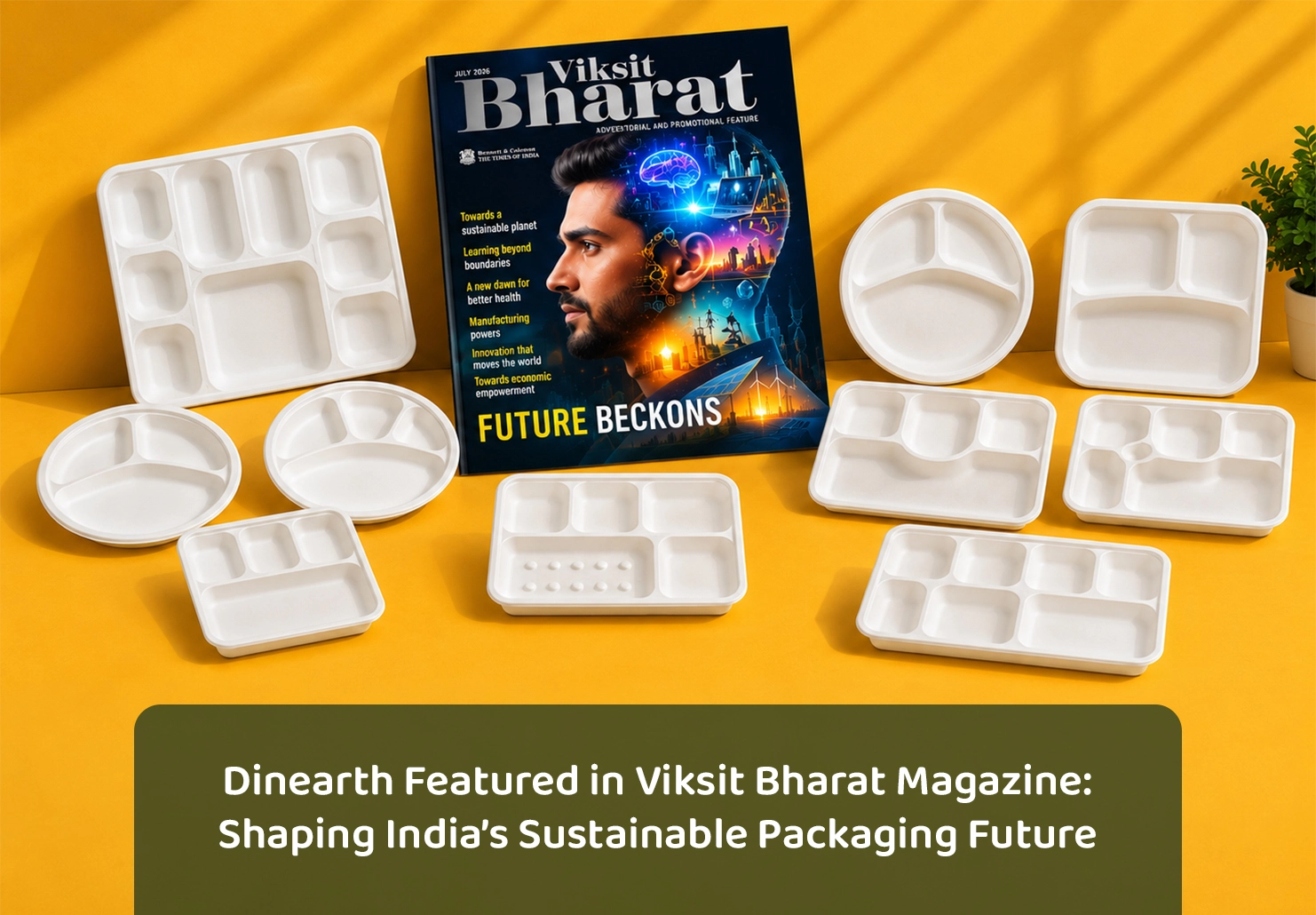
The same basic plant-fibre material can ultimately become:
This flexibility is one of the reasons bagasse has become an important material in sustainable food packaging.
5. Drying and Finishing
After forming, the products need further processing to achieve their final characteristics.
Drying removes remaining moisture and helps the fibre structure stabilise. Depending on the manufacturing system and product, additional finishing operations may include trimming edges and checking the surface and shape.
A well-made product needs more than an attractive appearance.
The rim needs to be consistent. The base should sit properly. The dimensions should remain within the required specifications. Containers and lids, where applicable, need to fit correctly.
These details matter particularly for commercial customers buying tableware in large quantities.
6. Quality Control Is Part of the Manufacturing Process
Sustainable does not mean that performance can be compromised.
For a restaurant, QSR or food packaging buyer, the tableware still needs to perform its basic job. A bowl must hold the intended food. A plate needs to retain its shape. A container needs to be suitable for its intended application.
Quality checks can therefore include areas such as:
- Product dimensions
- Weight and thickness
- Shape consistency
- Surface finish
- Structural strength
- Edge quality
- Product appearance
- Packaging and quantity checks
For export-oriented manufacturers, consistency becomes even more important because products may travel long distances before reaching the final customer.
7. Certifications Add Another Layer of Confidence
For sustainable food packaging, buyers increasingly want more than a manufacturer's environmental claims. They want documentation and recognised standards that help them evaluate the product.
Dinearth's certification page lists a range of certifications and standards, including:
- BPI
- EN 13432
- ISO 17088
- FDA / USA Standard Food Grade
- BRC Certificate
- ISO 22000:2008
- Bio Based Certificate
- One Star Export House – Government Recognised
The same page also lists water and oil resistance among its product-related credentials.
For international buyers, these types of certifications can be particularly relevant because requirements can differ between markets. Certification should therefore be considered alongside the specific product, intended application and destination-market requirements.
8. Where Dinearth Fits Into India's Sustainable Tableware Story
Dinearth's story goes back to the experience of Abhinav Group, which its website says has been providing packaging and dining solutions since 1998. Dinearth was introduced as the group's initiative focused on compostable and biodegradable tableware.
The company's stated vision is to manufacture natural plant-fibre and other green packaging products for consumers and businesses in domestic and international markets.
Dinearth also highlights several product characteristics, including:
- 100% renewable natural plant fibre
- 100% non-plastic coating
- Food-safe and non-toxic positioning
- Free from heavy metals and other chemicals
- Microwave and freezer friendly
- Water and oil resistance
These are important because sustainable food packaging ultimately has to work in real foodservice environments—not just look sustainable on a product brochure.
9. Why Manufacturing Quality Matters to Buyers
For a consumer buying one plate, the difference between manufacturers may not be obvious.
For a restaurant or food business purchasing thousands of pieces, it becomes much more important.
A commercial buyer needs consistency across batches. Product dimensions, strength, nesting, packing quantities and performance can all influence the overall cost and usability of the packaging.
This is why choosing a sustainable tableware manufacturer should involve more than asking:
“Is the product biodegradable?”
A better set of questions is:
- What is it made from?
- How is the fibre processed?
- How is the product formed?
- What quality checks are carried out?
- What certifications or test documentation are available?
- Is the product suitable for the intended food application and market?
These questions help buyers look beyond the word eco-friendly and understand the actual product behind it.
From Sugarcane Fibre to a Finished Foodservice Product
The manufacturing journey can be summarised simply:
Sugarcane → Bagasse → Fibre Preparation → Pulp → Moulding → Drying & Finishing → Quality Control → Finished Tableware
What looks like a simple bowl or plate on a restaurant table is therefore the result of several controlled manufacturing stages.
India's plant-fibre packaging industry is continuing to develop, and manufacturers are increasingly serving both domestic foodservice businesses and international buyers. Current industry sources describe a similar core manufacturing sequence of pulp preparation, forming, drying/finishing, inspection and commercial packing.
For Dinearth, this manufacturing approach fits into a broader vision: using renewable natural plant fibre to create practical tableware for a more sustainable food packaging ecosystem. Learn more about how bagasse tableware is revolutionizing disposable dining or explore the journey of bagasse from waste to wonder.
Frequently Asked Questions
Sustainable tableware made from sugarcane bagasse generally goes through several stages, including fibre preparation, pulping, moulding, drying, finishing, quality inspection and packing. The prepared plant fibre is formed into products such as plates, bowls, trays and food containers.
Sugarcane bagasse is the fibrous material remaining after sugarcane is processed for juice. It can be processed into pulp and moulded into foodservice products such as plates, bowls and containers.
Food safety depends on the specific product, manufacturing process and applicable food-contact requirements. Dinearth states that its tableware is safe for food and non-toxic, and its certification page lists FDA/USA food-grade standards among its credentials.
Dinearth's certification page lists BPI, EN 13432, ISO 17088, FDA/USA Standard Food Grade, BRC, ISO 22000:2008, Bio Based certification and One Star Export House recognition. Buyers should confirm the applicable certification for the specific product and market.
Sugarcane bagasse is a renewable plant fibre that can be processed into moulded foodservice products. Its ability to be formed into different shapes makes it suitable for products such as plates, bowls, trays and food containers. Dinearth uses renewable natural plant fibre as the basis of its sustainable tableware range.